Add Us On Google
One year into President Donald Trump’s second term, White evangelical Protestants remain among his strongest supporters.
The latest Pew Research Center survey, conducted Jan. 20-26, 2026, finds that most White evangelicals (69%) approve of the way Trump is handling his job as president. And a majority (58%) say they support all or most of his plans and policies.
A smaller share of White evangelicals (40%) say they are extremely or very confident Trump acts ethically in office. But on this question, too, they express substantially more positive views than other Americans.
At the same time, White evangelicals’ views of Trump are less positive than they were in the early days of his second term. The changes in their views mirror those seen among the U.S. public as a whole.
For instance, there has been an 8-percentage point drop since early 2025 in the share of White evangelicals who support all or most of Trump’s plans and policies. And there has been a 15-point drop in the share who are confident Trump acts ethically in office.
Trump’s approval rating among White evangelicals is also down compared with early 2025 (69% today vs. 78% then), though several other Center surveys over the past year have measured ratings near this level.
The comparatively positive views that evangelicals express about Trump reflect the group’s partisan orientation. White evangelicals are heavily Republican, and Republicans in general are far more positive toward Trump than Democrats are. Even among Republicans, however, confidence in Trump has declined over the past year.
The rest of this analysis looks at how people in other religious groups view Trump and how their views have changed since last year.
Support for Trump’s plans and policies
Among White Protestants who are not evangelical, support for Trump’s plans and policies has dropped 13 points over the past year, from 46% to 33%.
Support has also declined among religiously unaffiliated Americans. Last year, 20% in this group said they support all or most of Trump’s plans and policies; today, 13% do. (The religiously unaffiliated category, sometimes called the religious “nones,” includes people who describe themselves as atheist, agnostic or “nothing in particular.”)
Catholics’ support for Trump’s agenda has not changed significantly over the past year.
And as was the case last year, very few Black Protestants support all or most of Trump’s plans and policies (8% then, 6% now). Black Protestants are a largely Democratic-leaning group.
Views on Trump’s ethics in office
Compared with a year ago, White Protestants and religiously unaffiliated adults now have significantly less confidence that Trump acts ethically in office.
For example, 26% of White nonevangelical Protestants are extremely or very confident Trump acts ethically in office, down from 38%.
And the share of religious “nones” who have a lot of confidence in Trump’s ethics now stands at 10%, down from 16%.
Confidence in Trump’s ethics has remained low among Black Protestants.
Views of Trump’s job performance
Currently, White evangelicals are the only large religious group in which a clear majority approve of Trump’s job performance.
Roughly half of White Catholics (52%) and White Protestants who are not evangelical (46%) also approve of the way Trump is handling his job.
By comparison, Trump’s approval rating is much lower among religious “nones” (24%), Hispanic Catholics (23%) and Black Protestants (12%). All three are traditionally Democratic groups.
In most religious groups, Trump’s approval ratings are significantly lower now than in the first days of his new term. But they are generally on par with readings taken since April 2025.
Hispanic Catholics are the only religious group in which the decline in Trump’s approval rating since early 2025 is not statically significant at the 95% confidence level. However, the 8-point decline among this group is statistically significant at the 90% confidence level.
Note: Here are the questions used for this analysis, along with responses, sample size information for religious groups and the survey methodology.
Facts you can rely on.
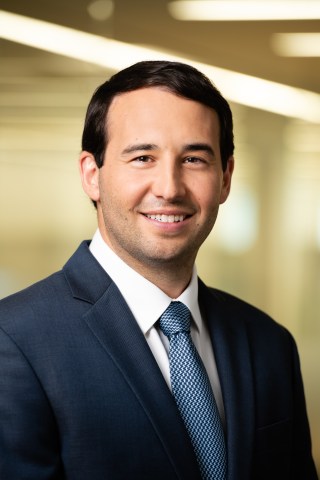
Chip Rotolo is a research associate at Pew Research Center.

Gregory A. Smith is a senior associate director of research at Pew Research Center.